Which Is Healthier: Tea or Coffee?
In this series, I explore two foods or drinks that people often debate about, asking the same question: Which is healthier? You can find more comparisons in the “Which Is Healthier” category on the sidebar. Today’s match-up is one of the most popular worldwide: tea or coffee.
After water, tea and coffee are the most consumed beverages in the world. Billions of people begin their day with one or the other, and both are known for rich flavors and potential health benefits. But when it comes to your health, which one truly deserves the crown? Let’s look at the evidence.


Calories and Add-Ons
Plain tea and black coffee are both extremely low in calories — virtually zero per cup. The difference shows up when you add sugar, milk, cream, or syrups.
-
A cup of black or green tea is easy to enjoy with little or no sweetener.
-
Coffee, however, is often consumed with sugar and cream. Popular café drinks like a White Chocolate Mocha can climb to over 450 calories, nearly a full meal.
Takeaway: Both drinks are naturally light, but tea is easier to enjoy without extra calories.
Fighting Chronic Diseases
This is where research gets really interesting. Both drinks have been studied for decades, but coffee has been the star of many large, long-term studies.
-
Coffee
-
Linked to reduced risk of Parkinson’s disease, Alzheimer’s disease, and type 2 diabetes.
-
A major New England Journal of Medicine study found that people who drank coffee regularly had a lower risk of death from cardiovascular and neurological diseases.
-
Coffee compounds (caffeine, chlorogenic acids) appear to improve insulin sensitivity and protect neurons.
-
-
Tea
-
Green tea is studied for its catechins, especially EGCG, which may play a role in cancer prevention. But results remain inconclusive, according to the American Cancer Society.
-
Regular tea consumption has been linked to lower risk of stroke and heart disease, especially in populations where green or black tea is consumed daily.
-
Takeaway: Coffee currently has stronger scientific backing in chronic disease prevention, though tea still shows protective effects.
Mental Health and Mood
Caffeine content sets these two apart.
-
A standard cup of coffee has about 95 mg caffeine, while black tea has 40–50 mg, and green tea about 25 mg.
-
Coffee
-
In moderation, coffee is linked with a lower risk of depression, especially in women. A Harvard School of Public Health study found that women who drank 2–3 cups daily had a significantly lower risk of depression compared to non-drinkers.
-
Too much caffeine, however, can lead to anxiety, irritability, and insomnia.
-
-
Tea
-
Tea provides a calmer kind of alertness. It contains L-theanine, an amino acid that promotes relaxation while balancing caffeine’s stimulating effects.
-
A Japanese study found that older adults who drank more green tea had fewer depressive symptoms.
-
Takeaway: Tea provides steady, calm energy. Coffee provides stronger stimulation but may trigger side effects if over-consumed.
Antioxidants
Both drinks are rich in antioxidants, which help the body fight oxidative stress and inflammation.
-
Coffee is one of the largest sources of antioxidants in Western diets, mainly due to the volume people drink (USDA Database).
-
Tea provides catechins and polyphenols that have been studied for their role in reducing oxidative stress and supporting metabolic health.
Takeaway: Both deliver powerful antioxidants. Coffee often provides more per cup, but multiple cups of tea daily can match or exceed that.
Beauty and Skin Health
Tea has long been praised for its skin benefits. Green tea polyphenols are even used in cosmetic products for their anti-inflammatory and anti-aging effects.
Coffee also has beauty perks — caffeine is found in eye creams to reduce puffiness, and coffee scrubs are popular for exfoliation.
Takeaway: Tea offers gentler, consistent benefits for skin and beauty, while coffee is more about targeted cosmetic uses.
Caffeine
Coffee usually contains around 95 mg of caffeine per cup, while black tea has about 40–50 mg, and green tea closer to 25 mg. This makes coffee the stronger stimulant.
Caffeine can temporarily raise cortisol, the body’s stress hormone, especially in the morning or when taken in high amounts. While this effect is not always harmful and may lessen in regular coffee drinkers, too much can still cause jitters, anxiety, or poor sleep in sensitive people. According to a PubMed review, results about caffeine and cortisol are not fully conclusive.
Tea, with its lower caffeine content and calming L-theanine, generally provides a steadier and gentler lift in energy — making it a better choice for those who want alertness without the side effects.
So, Tea or Coffee?
Both drinks have compelling advantages:
-
Coffee has strong evidence for reducing the risk of neurodegenerative diseases, type 2 diabetes, and even lowering mortality rates.
-
Tea shines in beauty, relaxation, and providing steady energy thanks to L-theanine.
The truth is, you don’t need to choose just one. Each has unique strengths, and both can be part of a healthy lifestyle if consumed in moderation — about 3–4 cups of coffee per day, or 4–6 cups of tea depending on caffeine tolerance.
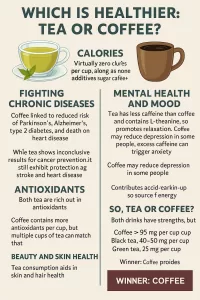
Winner revealed: In terms of scientific evidence, coffee currently edges ahead for chronic disease prevention. But if you consider calm energy, beauty, and overall balance, tea holds its own.
👉 The best choice isn’t tea or coffee — it’s enjoying both in moderation, depending on your needs and preferences.
Recipes
Coffee
I’ve published many posts about coffee, and reci[es made with coffee. Check them out here
Coffee scones (Gluten Free)


Tea
I’ve also wrote about tea in more deatils. Check out facts about tea , and recipes
Quick “Earl Grey Tea” Orange Oatmeal



What do you enjoy more — tea or coffee? Share your thoughts in the comments below!