Vegetables & Fruit challenge: Butternut Squash
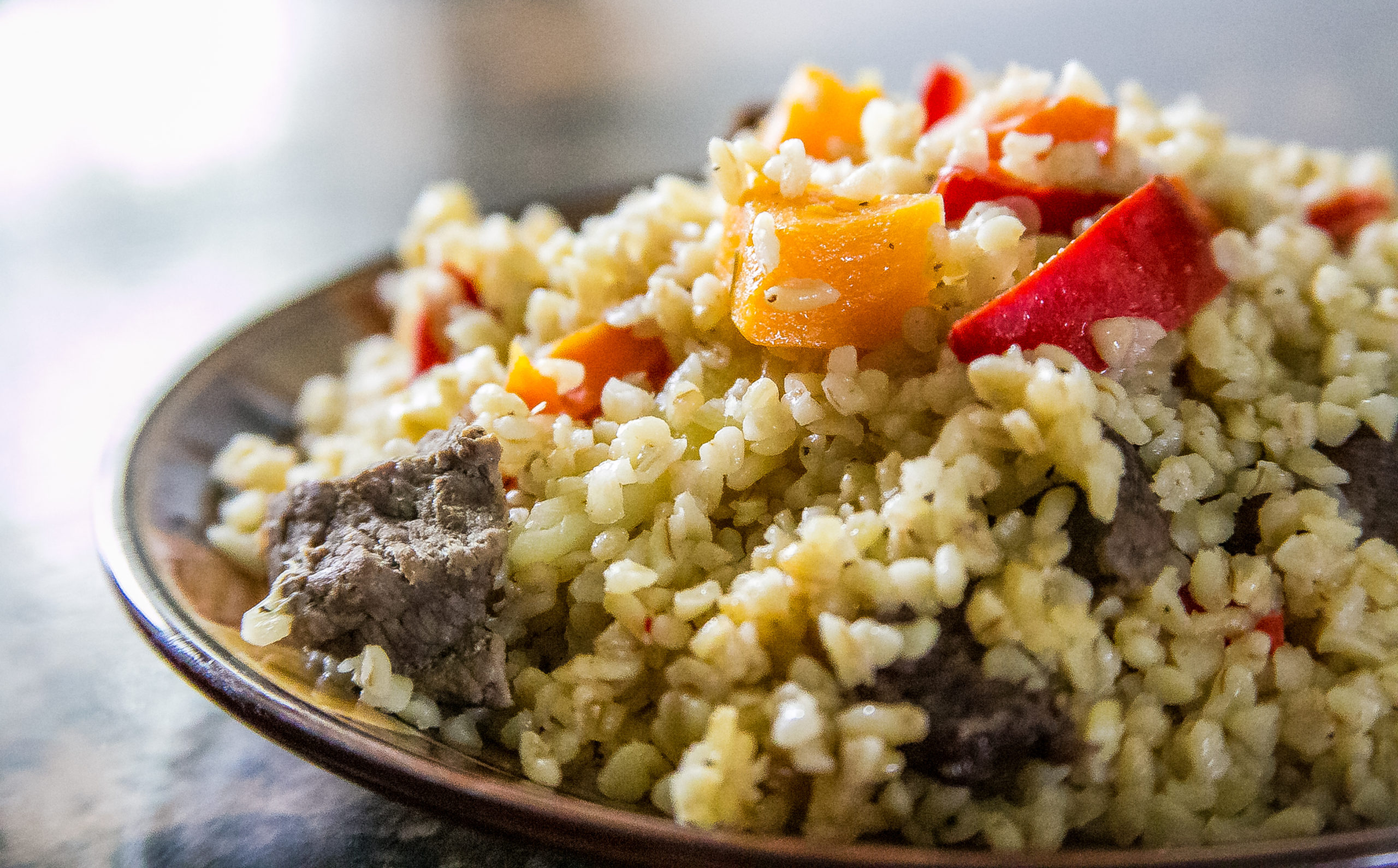
This bulgur pilaf with butternutsquash is nourishing, fulfilling and good for the soul too. Filled with vegtables and packed with protein, that’s what makes it the best meal ever!

Disclaimer: We are at Nutrizonia a participant in the Amazon Services LLC Associates Program, an affiliate advertising program designed to provide a means for sites to earn advertising fees by advertising and linking to Amazon.com . We earn a small percentage, when you click and order these items (same cost, no extra fess needed).
Cooking a new food is like going into a high risky adventure. It’s fun, exciting and, intimidating as well. It may come out with unpleasant results. But for me it’s always worth trying! I tried Kale before. Today the new food item is Butternut squash!
I feel it’s a fancy name for a fruit. Is it a fruit or a vegetable? Botanically (relating to plants) it’s a fruit but, in culinary art it’s considered as veggie. When I saw butternut squash for the first time, I thought it’s a pumpkin; I didn’t know that there is another kind of veggies, but they are related to the same family. It tastes like sweet potato & pumpkin, but not too sweet like pumpkin, and not so fibrous like sweet potato. It gets sweeter as it ripens, and it suits savory dishes better.
Why do you should eat Butternut squash
There are so many health benfits to butternut squash
- It has a great nutrition profile, It’s high in Vitamins like A and E ,and B vitamins like Thiamin B1, Niacin B3, B6, Folate and Vitamin C.
- Also, it has good amounts of minerals like Potassium, Magnesium, Calcium, and Manganese.
- Also high in antioxidants like beta-carotene, and after all it’s a low calorie food.
- Other advantages for eating Butternut Squash, that is relatively a cheap product, satisfying, and easy to deal to with, either roasted or cooked. The peak season is in autumn, but its available year around, coming from South America continent.
Why Bulgur Is the Perfect Match
Bulgur — a staple in Middle Eastern cuisine — is made from whole wheat that’s parboiled, dried, and cracked. It’s full of fiber, magnesium, and plant-based protein.
Unlike rice, bulgur cooks quickly and doesn’t need much supervision. You can enjoy it raw in salads like Tabbouleh (using fine bulgur) or cooked in hearty dishes like this pilaf (using coarse bulgur).
This version mixes classic Arabic flavors with a light, nutritious twist. My mom used to make a similar recipe with pumpkin — this one is my healthier take, using butternut squash for a softer, milder taste.


FAQs
1. Can I make this vegetarian or vegan?
Yes! Simply omit the beef and replace it with chickpeas or lentils for protein. Add a little vegetable stock for depth of flavor.
2. What type of bulgur should I use?
Use coarse bulgur for pilafs and cooked dishes. Fine bulgur softens too quickly and is better for salads like tabbouli.
3. Can I use quinoa or couscous instead of bulgur?
Yes, quinoa works beautifully and keeps it gluten-free. Couscous gives a softer, fluffier texture. Adjust water and cooking time as needed.
4. How can I store leftovers?
Keep in an airtight container in the refrigerator for up to 3 days. Reheat gently with a splash of water or broth.
5. Can I freeze it?
Yes, but for best texture, freeze without zucchini. Thaw overnight and warm it slowly on the stovetop.
6. Is bulgur gluten-free?
No, bulgur is made from wheat and contains gluten. If you need a gluten-free version, substitute with quinoa or brown rice.
7. Is seasoning gluten-free?
If you’re using store-bought spice blends or stock cubes, always check the labels. Some mixes may contain gluten-based fillers or flavor enhancers. Pure spices (like cumin and cardamom) are naturally gluten-free.
8. Can I use a different cut of meat?
Yes, lean beef, lamb cubes, or even shredded chicken work well. If using chicken, reduce cooking time to prevent overcooking.
Kitchen Note
This pilaf tastes even better the next day — the spices deepen, and the butternut squash turns velvety. It’s one of those humble, one-pot meals that bring warmth and nourishment to the table. Serve it with yogurt or a fresh salad for a perfectly balanced meal.


{{Shop the recipe}}
Coarse Bulgur
Save it , pin it for later
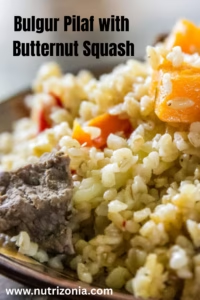

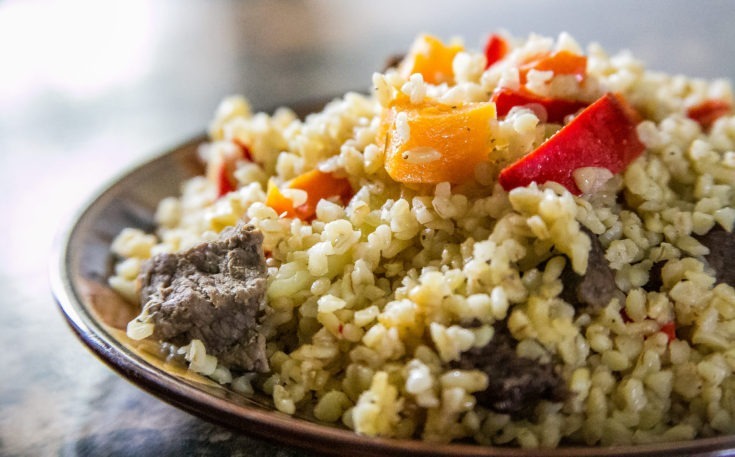
Bulgur Pilaf with Butternut Squash
Ingredients
- 200g of Bulgur
- 1 lb of Beef cubes
- 1 oz of Onion chopped (diced)
- 130g of butternut squash
- 3 medium Carrots
- 2 medium Zucchinis
- 1 medium Red Bell Peppe
- 2 cups of water
- 3 Tbsp. of Olive Oil
- 2 tsp. of each Cumin powder, Cardamom powder, Dried Basil (optional)
Instructions
- Peel the butternut squash with a vegetable peeler (mine is a small one, so I used a sharp big knife).
- Remove the seeds, and cut it into cubes.
- Cut the other veggies, cut them evenly.
- Heat the cooker, brown the meat with 1 Tbsp. of olive oil, and put it aside.
- Add the rest of olive oil, sauté onions, and veggies for 3 minutes.
- Add bulgur, water, and beef cubes, and leave it for 30 min.
- Serve hot, and refrigerate any leftovers
Notes
The skin is edible if you want to leave it, just make sure to wash it very well. If you wish you can boil the meat before, then add to the Bulgur mixture, but you will get a rich flavor if you cook all the ingredients together. If you don’t like mushy veggies, you can skip zucchini, but I love it, because it adds moistness to dishes.
Nutrition Information:
Amount Per Serving: Calories: 508Total Fat: 29gSodium: 293mgCarbohydrates: 55gFiber: 14gProtein: 30g
Have you tried butternut squash before? Did you like it?