These Middle Eastern stuffed grape leaves are the perfect healthy appetizer for any time of the day or weekend, and they are a total crowd-pleaser for any gathering! They are naturally vegan, packed with flavor, and easily made gluten-free friendly.


Disclaimer: We are at Nutrizonia a participant in the Amazon Services LLC Associates Program, an affiliate advertising program designed to provide a means for sites to earn advertising fees by advertising and linking to Amazon.com . We earn a small percentage, when you click and order items here in the post, or other items (same cost for YOU, no EXTRA fess needed).
This is such an old post with bad photos that really needed an update! While the new photos are not an extravaganza by any means, you can definitely see the difference.
I love these grape leaves, but I love them even more when I share them with others. This kind of appetizer was created to be shareable, and it tastes so much better when you enjoy it together!
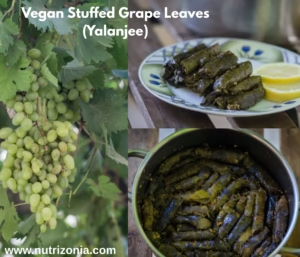
Below are some raw leaves fresh from my mom’s vine. They look so good when you spend every afternoon sitting under them, sipping tea or coffee with the family. See the photo below 🙂
I love how nutritious they are and try to use natural ingredients as much as possible. I know fresh leaves may not be available where you live, but the ones in brine solution work great too!
🌿 The Heritage Behind Yalanji
I started my Arabic Cuisine series on the blog to feature and document my traditional heritage food.
While I previously shared a recipe for classic stuffed grape leaves with meat (War’a Dawali), this vegan version—known as Yalanji—is completely different! The word Yalanji comes from the Turkish word for “fake” or “impostor,” referring to grape leaves stuffed without any meat.
This style is especially popular for morning gatherings or afternoon tea. Because they are so freezer-friendly, you can easily make a big batch ahead of time with the help of your daughter, mother, a friend, or even a neighbor!
These leaves are mostly eaten cold with a splash of fresh lemon juice. While you will find many variations across the Arab world—like Iraqi dolma or Lebanese versions with chickpeas—this recipe is authentic Syrian style made with whole-grain bulgur, fresh herbs, lemon, and tangy pomegranate molasses.


🥗 Health Benefits of Grape Leaves & Bulgur
Grape leaves and whole-grain bulgur make a powerful, nutrient-dense pair:
-
Low-Calorie & Low Glycemic Load: Grape leaves fill you up with dietary fiber while naturally maintaining a very low glycemic load, making them a fantastic, blood-sugar-friendly choice.
-
Rich in Polyphenols & Antioxidants: Studies show grape leaves (Vitis vinifera) are packed with plant compounds like flavonoids, tannins, and resveratrol, which provide strong anti-inflammatory and cellular protection.
-
High in Essential Vitamins: Packed with Vitamin A (for immune and eye health) and Vitamin K (for proper blood clotting and bone strength).
-
Loaded with Minerals: Great natural source of calcium, magnesium, and iron to support overall vitality.
-
Whole Grain Power: Replacing white rice with coarse bulgur wheat boosts dietary fiber and protein, delivering complex carbohydrates that release energy slowly and keep you satisfied longer.
Save it , pin it for later!

💡 Variations & Substitutions
-
Gluten-Free Option: Simply swap the 1/2 cup of uncooked bulgur for 1/4 cup of uncooked short-grain rice (such as Egyptian or Arborio rice).
-
Rice Options: Short-grain white rice or brown rice work wonderfully if you prefer rice over bulgur.
-
Fresh vs. Jarred Leaves: Fresh leaves picked straight from the vine are ideal (blanch for 5 minutes), but jarred leaves in brine solution are great too—just rinse and drain them thoroughly.
❓ Frequently Asked Questions (FAQs)
Are Yalanji served hot or cold?
They are traditionally served cold or at room temperature with a generous squeeze of fresh lemon juice!
Can you freeze stuffed grape leaves?
Yes! They are very freezer-friendly. You can freeze the stuffed leaves before cooking, or freeze them after cooking once completely cooled.
How long do they keep in the fridge?
You can keep cooked Yalanji stored in an airtight container in the fridge for 2 to 4 days.


*****************************************************************************************
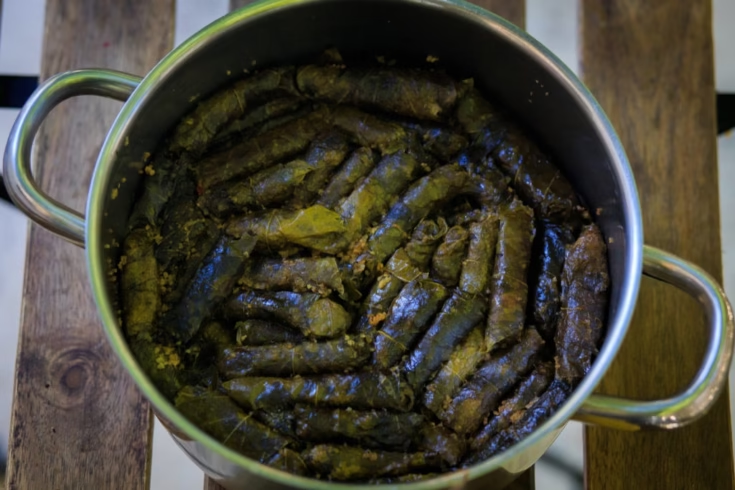
The old photo hhhh h, not the best i know !


🛒 Shop the Recipe
Here are the essential kitchen tools and ingredients used for this recipe:
-
Pomegranate Molasses: Essential for that signature tangy and sweet Levantine flavor.
-
Coarse Bulgur Wheat: Gives the filling a firm, nutty texture without becoming mushy.
-
Heavy-Bottomed Pot :Essential for even heat distribution while simmering your grape leaves for hours without burning the bottom.
-
Heat-Proof Pressing Plate Keeps the leaves tightly pressed so they don’t unroll while simmering.
Now invite a friend over, and make these delicious stuffed grape leaves together! Let’s get to the recipe!
Vegan stuffed grape leaves
Authentic Syrian Vegan Stuffed Grape Leaves (Yalanji) filled with whole-grain bulgur, fresh parsley, tomatoes, lemon juice, and tangy pomegranate molasses. Served cold as a healthy, nutrient-dense Mediterranean mezze appetizer.
Ingredients
- 1/2 cup uncooked coarse bulgur (or 1/4 cup uncooked short-grain rice for gluten-free option)
- 2 Tbsp pomegranate molasses
- 1 bunch fresh flat-leaf parsley, finely minced
- 1 medium Roma tomato, finely minced
- 1 small yellow onion, finely minced
- Around 50 grape leaves (fresh or jarred in brine solution)
- 1 tsp olive oil + 1 Tbsp extra virgin olive oil
- Juice of 1 medium fresh lemon (approx. 3 Tbsp)
- Pinch of sea salt
Instructions
- Soak the bulgur for 15 minutes with little water, and some lemon.
- Wash the leaves, and drain them very well to get rid of the brine solution.
- You can boil them for 5 minutes to make them tender. But you can skip this step (I did skip it).
- Add the veggies to the bulgur, and mix them.
- Add lemon, pomegranate molasses, salt, and olive oil.
- For every leaf, put a tsp of filling, and fold it.
- Put them tightly in a small or medium pot. Cover the leaves with a plate or bowl over, and cover the pot with a tight lid.
- Add just enough water to cover leaves and let them on the stove on high heat for 10 minutes, then on low heat for 1 hr.
- Serve it cold, you can keep it for 2 to 4 days in the fridge.
Notes
Nutrition Information:
Yield:
6Serving Size:
1Amount Per Serving: Calories: 58Total Fat: 1gSaturated Fat: 0gUnsaturated Fat: 1gSodium: 2mgCarbohydrates: 11gFiber: 3gSugar: 2gProtein: 2g
📌 Related Recipes from the Arabic Cuisine Series
-
Stuffed Grape Leaves (War’a Dawali) – The classic warm version stuffed with spiced meat and rice.
-
Creamy Mutabal (Eggplant Dip) – Traditional roasted eggplant mezze with tahini and garlic.
-
Fresh Lebanese Tabbouleh – Vibrant parsley, mint, and cracked wheat salad.
Have you tried making Yalanji at home before, or do you prefer the warm meat-stuffed grape leaves (War’a Dawali)? Let me know in the comments below,


I’m vegan and have a grape leaf roller so I’m excited to try them. Can the grape leaves be frozen after I make them???
Thank you:
Liam.
Yes definitely, enjoy! Thaw in the fridge for couple of hours after you freeze them2