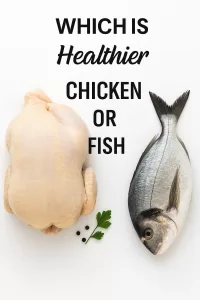
This is another post in the “Which is Healthier” series. Today we will discuss, Chicken or Fish! These are two of the most popular protein sources worldwide. Both are highly nutritious and versatile, but they differ in nutrient profiles, health effects, and potential risks. In this article, we’ll explore their nutritional value, health benefits, risks, and ultimately decide which is the healthier choice.

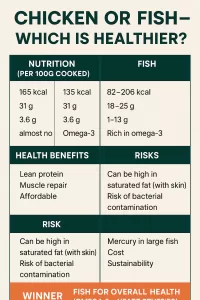
Nutrition
Chicken (skinless breast, cooked)
-
~165 kcal per 100g
-
~31g protein
-
~3.6g fat (very little saturated fat if skinless)
-
Rich in niacin (B3), B6, phosphorus, selenium
(Source: USDA FoodData Central)
Fish (varies by type)
-
Cod: ~82 kcal/100g, Salmon: ~206 kcal/100g
-
~18–25g protein
-
1g (lean fish) – 13g fat (oily fish)
-
Excellent source of omega-3 fatty acids (EPA & DHA)
-
Provides vitamin D, B12, iodine, selenium
(Source: Salmon vs Chicken comparison)
Health Benefits
Heart Health
Fish is strongly associated with better cardiovascular health. Omega-3 fatty acids lower triglycerides, reduce inflammation, and may reduce the risk of heart attacks and strokes. Multiple studies confirm this link, including a major clinical trial published in the New England Journal of Medicine (NEJM Study) and a large cohort study in JAMA (JAMA Study). A review published in the National Library of Medicine also concluded that omega-3 fatty acids significantly lower cardiovascular mortality (PMC Review).
Chicken, especially when skinless and grilled or baked, provides lean protein with much lower saturated fat than red meat. The American Heart Association highlights chicken and fish as better protein options compared to beef or processed meats (AHA Guidance).
Brain Function & Inflammation
Fish offers clear advantages for brain health. Omega-3 fatty acids (EPA and DHA) play a vital role in cognitive performance and may protect against age-related decline. A growing body of research suggests regular fish consumption reduces risk of Alzheimer’s and improves memory function. Chicken also supports brain health through choline and B vitamins, though fish remains superior in this category.
Muscle Building & Weight Management
Chicken is one of the most effective foods for muscle growth thanks to its high-quality protein and low calorie content. A 100g serving of chicken breast has ~31g of protein with very little fat, making it popular among athletes and those on weight-loss diets. Studies show high-protein diets increase satiety and preserve lean muscle mass while reducing fat.
Fish also contributes to muscle building, though oily fish contains more calories due to healthy fats. Still, its protein quality is excellent, and studies suggest combining fish protein with omega-3s may even enhance muscle repair after exercise.
Diabetes & Metabolic Health
Replacing red meat with chicken or fish improves insulin sensitivity and lowers diabetes risk. In a meta-analysis, people who consumed more poultry and fish had significantly better fasting blood sugar and lipid profiles compared to those consuming more red or processed meats (NIH Study). Both foods have a low glycemic index and do not spike blood sugar.
Risks
Chicken
-
With skin, higher in saturated fat.
-
Risk of foodborne illness if undercooked (Salmonella, Campylobacter).
-
Processed chicken (nuggets, fried) adds sodium and unhealthy fats, linked to higher cardiovascular risk in long-term studies.
Fish
-
Mercury accumulation in large predatory fish (tuna, swordfish, king mackerel). The FDA recommends limiting intake of these species, especially for pregnant women (FDA Guidance).
-
Sustainability concerns with overfishing. Look for eco-labels like MSC certification.
-
Oily fish like salmon can be more expensive compared to chicken.
Protein Quality
Both chicken and fish provide complete proteins containing all essential amino acids. Research on protein digestibility (PDCAAS scores) confirms both are high-quality sources. Fish, however, provides the additional benefit of omega-3 fatty acids, which chicken lacks (Allina Health Protein Chart).
Winner
Fish! With its omega-3 fatty acids, vitamin D, and proven cardiovascular protection, fish edges ahead of chicken as the healthier choice overall.
Chicken remains an excellent, affordable source of lean protein, especially for those focused on muscle building and budget-friendly meals.
Best choice: Alternate between both — 2–3 servings of fish weekly and 2–3 servings of chicken — to maximize health benefits, maintain variety, and cover all nutritional bases.
Recipes to Try
Chicken:
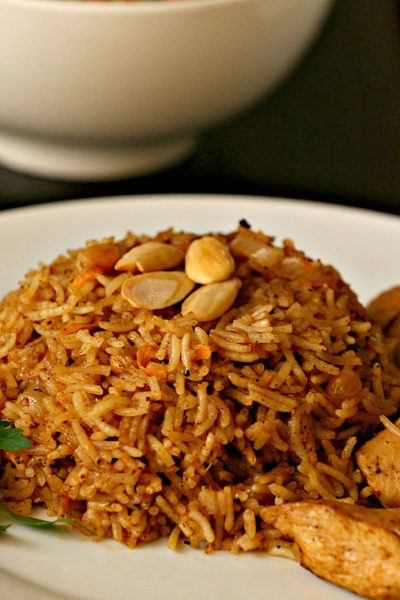
Is my perosnal favorite protien, so you will find many recipes here in the blog , and this recipe is also personal favorite
Easy Healthy Baked Chicken


Fish
I defitnely need to post more rcipes with fish fhere on the blog. Here is a recipe I made that you can apply or get inspired by!
Sweet and Sour veggies over Tilapia