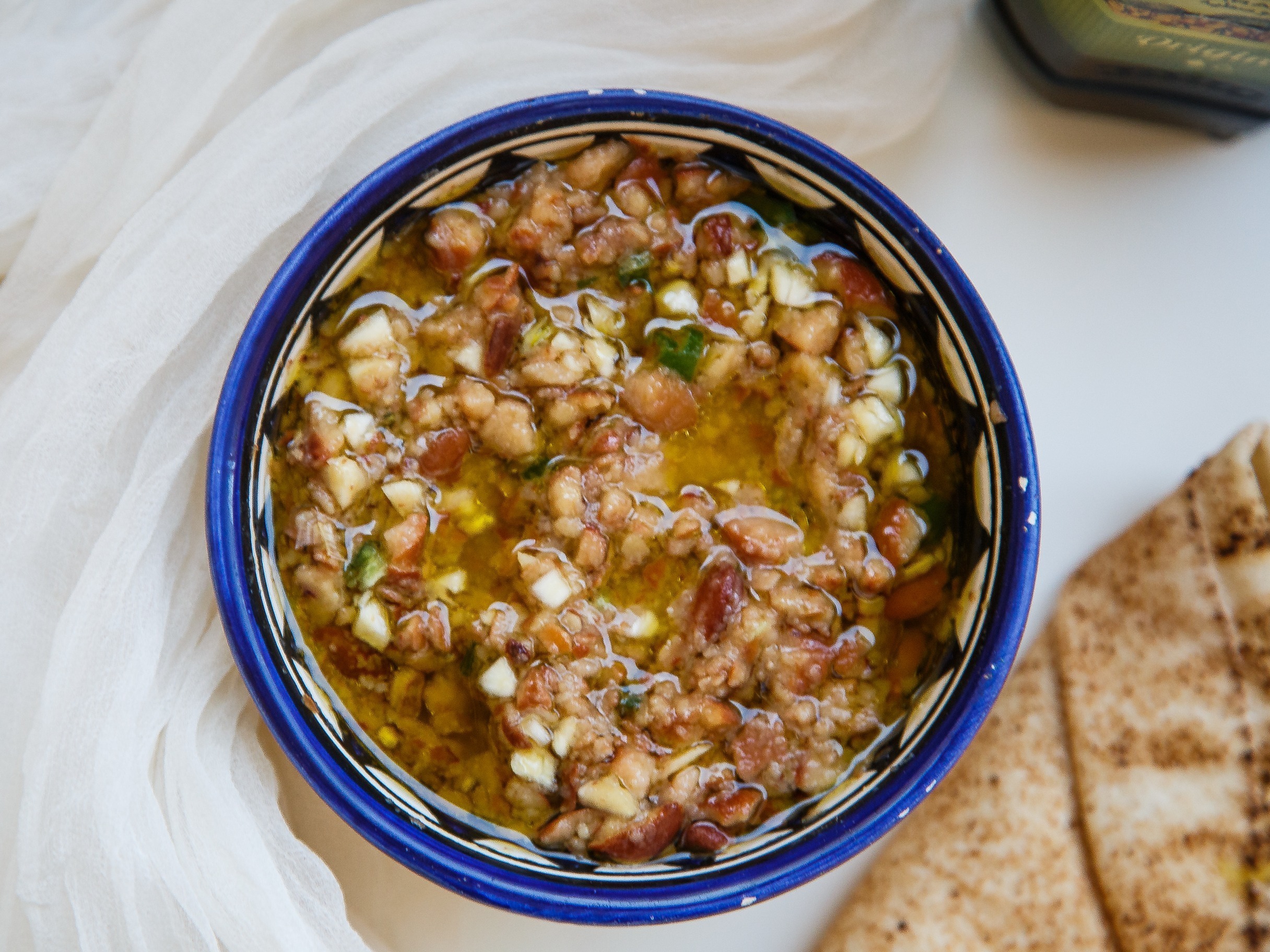
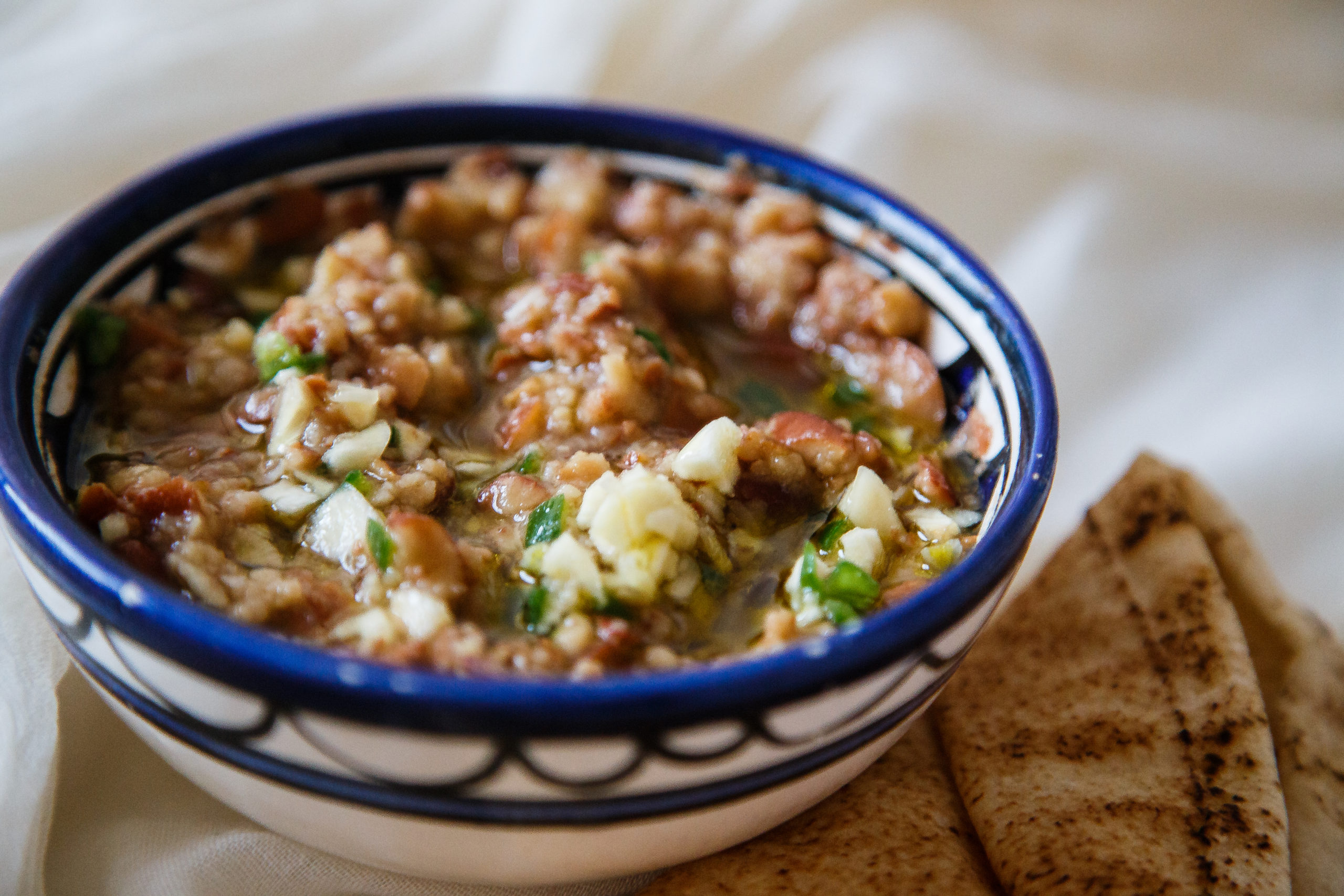
An easy to make appetizer that is delicious and unique in flavor. With a freshly squeezed lemon juice, and a drizzle of good quality olive oil, with fresh pita bread, this is the ultimate comfort meal! It’s naturally vegan and gluten free!

Disclaimer: We are at Nutrizonia a participant in the Amazon Services LLC Associates Program, an affiliate advertising program designed to provide a means for sites to earn advertising fees by advertising and linking to Amazon.com . We earn a small percentage, when you click and order these items (same cost, no extra fess needed).
UPDATE:
After almost five years of posting this recipe and starting the Arabic cuisine series. There are many initiatives now to keep the traditional and document Arabic recipes ans share personal stories. There were few bloggers that posted Arabic recipes in English. It was really hard to find reliable ones with good English, and beautiful photos. I only remember Sawsan, from chef in disguise
I updated the photo for this post, and I strongly encourage you to check the hashtag on Instagram, which is #AprilisforArabfood that has been created by two talented food bloggers that live in the united states. Mai , from @Almondandfig and she started a blog too, check it here. Also, Nadia from @sweetpillarfood .
It’s a whole month dedicated for sharing Arabic food, desserts like hareeseh or basboush (semolina based desserts) baklawa (baklava) umm ali… etc. Middle Eastern mezzeh is filled with naturally vegan, nutrient-dense dishes like this patata harrah (spiced potato,) and our traditional Arabic Eggplant Dip (Mutabal).
And main courses too, like Freekeh pilaf… and also pantry. We do lots of preserving food, like jams from the abundance of fruits, pickling and so much more..

Old content
**********************************

I don’t know why I feel offended sad, when I see food bloggers, and dietitians trying to “healthify” traditional dishes. I see them replacing bulgur with quinoa in Tabbouli. It does hurt. It may sound great, but I feel the dish lost it’s value. Not the nutritional one, but what it does mean to the people that have created. Ethnic food is not just about the food itself, it’s the memory it evokes, the clinging, and attachment feeling for home, the nostalgia. Yes you may grow out of love for your traditional food, but there is something that gets you back again, and again, you can’t deny it, or even describe!
You may find me attacking, but I believe all traditional food was cooked in a way to be suitable, and convenient. They were looking for affordable prices, and resources available at their time.
I want people to know my traditional food (Middle Eastern or Arabic cuisine) as it is. No modernizing. One reason is that I’m so far from home now, I want to honor the memories I have. Not just creating a recipe to impress. And I’m lucky that most of the dishes are really healthy, many of them are vegan, or gluten free, and minimal.
Therefore, I’m proud to start a series featuring my traditional food, one recipe at time. I’ll choose the most healthy ones. Today I’ll start with a simple appetizer.
Foul Mudammas (Mashed Fava beans)
It is an appetizer, usually combined with pita bread. The history of the dish goes way back to ancient Egypt. Now it’s popular in many Arabic, and some African ones.
For my family, it was on the breakfast table every weekend for years. Until we grew up and started to protest! I remembered that I want to change, and try other dishes on my own. But here I am and I can’t wait for the next meal!
Once, I made foul for a gathering of my husband’s classmates here in Iowa. They loved it! They used it as a dip with nachos, not the way I prefer it, but why not!
Why you should eat Fava beans:
- They are very nutritious, high in protein, fiber and B vitamins like folate.
- Also they offer good amounts of minerals like iron and manganese, and they have zero fat.
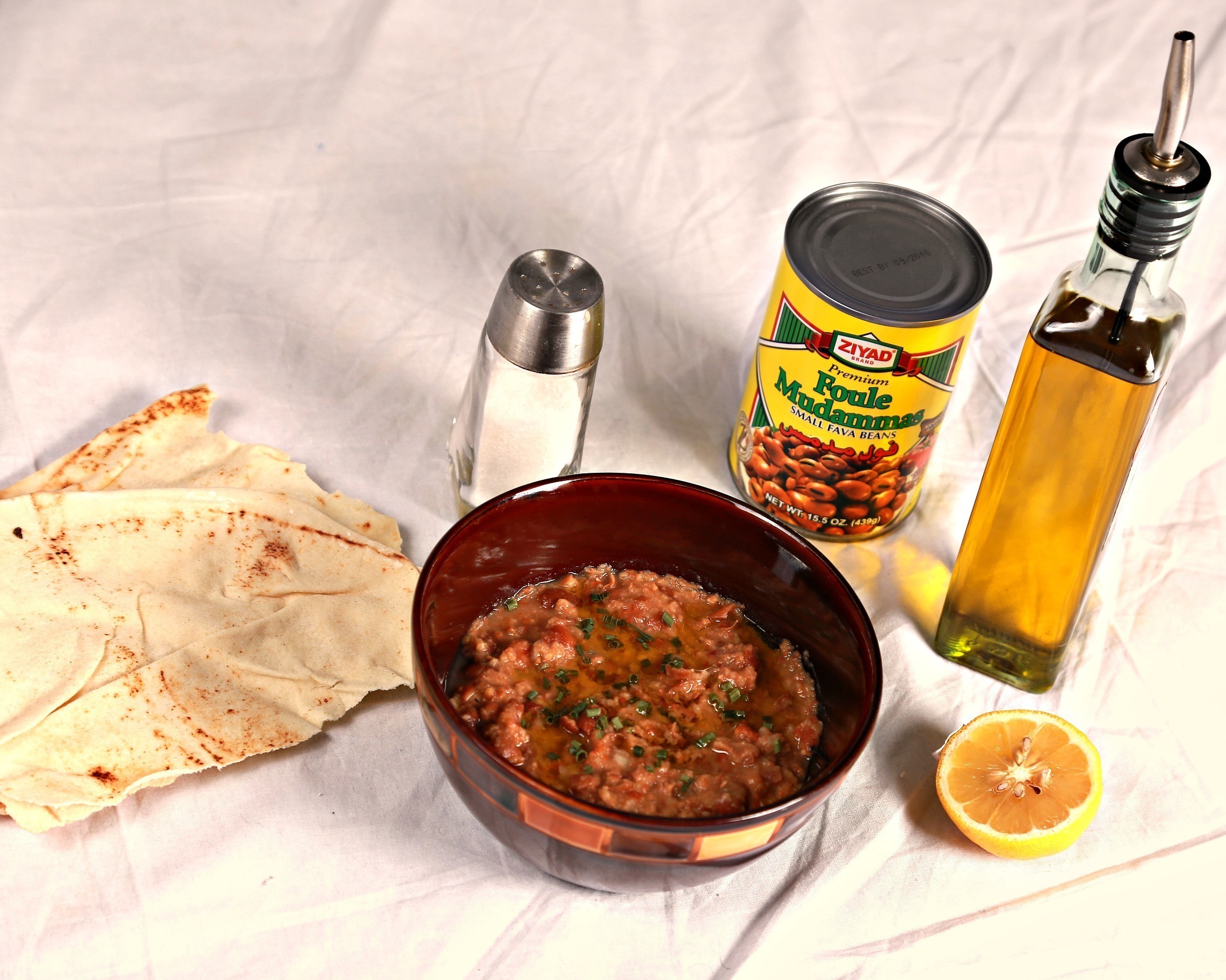
You can buy them dried, or canned from a Middle Eastern shop. You can find the brand I use and love here. I prefer canned, because the beans comes in a bigger size. Dried are mostly smaller size, and this makes the foul creamy, and I don’t like that. I prefer it to be lumpy.
Health Note:
People with G6PD deficiency (a genetic condition common in Mediterranean and Middle Eastern regions) should avoid fava beans, as they can trigger a reaction known as Favism..
❓ Frequently Asked Questions
1. Should I use canned or dried fava beans for Foul Mudammas?
Canned fava beans are the fastest and easiest option—they are pre-cooked, soft, and ready in 10 minutes. If using dried fava beans, soak them overnight and boil them for 1 to 2 hours until tender before mashing.
2. What is the difference between Egyptian and Levantine Foul Mudammas?
Egyptian Foul Mudammas usually features fully mashed fava beans seasoned heavily with cumin, garlic, and oil. Levantine versions (Jordan, Palestine, Lebanon) often keep the beans partially whole or lumpy, mixed with fresh lemon juice, crushed garlic, and diced tomatoes.
3. Is Foul Mudammas vegan and gluten-free?
Yes! Foul Mudammas is naturally 100% vegan, dairy-free, and gluten-free. Just ensure you serve it with gluten-free bread if you have a gluten sensitivity.
4. How long does homemade Foul Mudammas last in the fridge?
Stored in an airtight container, leftover cooked fava beans will stay fresh for up to 4 days. Reheat gently on the stove with a splash of water, olive oil, and fresh lemon juice.
Now let’s get to the recipe
Foul Mudammas (Mashed Fava beans)
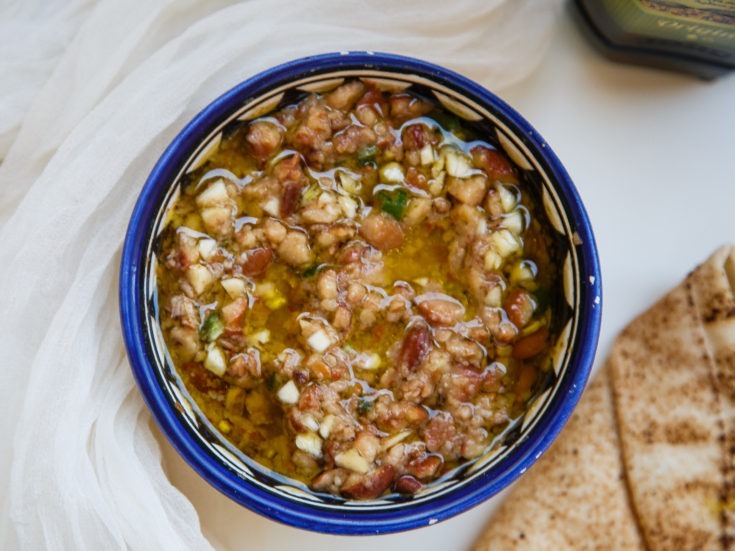
Foul Mudammas (mashed Fava beans) is an easy appetizer to fix, it's vegan and gluten free.
Ingredients
- Fava beans (1 can 440g)
- Juice of 1 lemon (or as desired)
- Raw minced garlic (as desired)
- Olive oil (as desired) for dressing
- 1 tsp of salt
Instructions
- Open the can, drain the liquid and wash the beans multiple times.
- Put the beans in a medium pot, and cover the beans with water, on medium heat. Leave it until the water boils. (This is optional since they are already cooked, but I feel it refreshes the beans).
- Put the beans in a medium bowl. Start adding water (You can use the water, you used for boiling).
- With a fork mash the beans and add water slowly, until you reach the desired consistency (Mine is lightly mashed)
- Mince some garlic. You can also add minced parsley, or green spicy pepper too. Add the lemon juice,and mix everything together.
- Dress the beans with high quality olive oil.
Notes
Since the garlic is raw, you might consider the quantity you add.
To get rid of the garlic odor, chew some parsley, or mint really well until you feel your mouth feels fresh.
Just know that having foul with pita bread, won't make the meal gluten free. Unless you can find gluten-free pita bread.
Nutrition Information:
Amount Per Serving: Calories: 110Total Fat: 0gSodium: 260mgCarbohydrates: 19gFiber: 8gProtein: 9g
Save the recipe 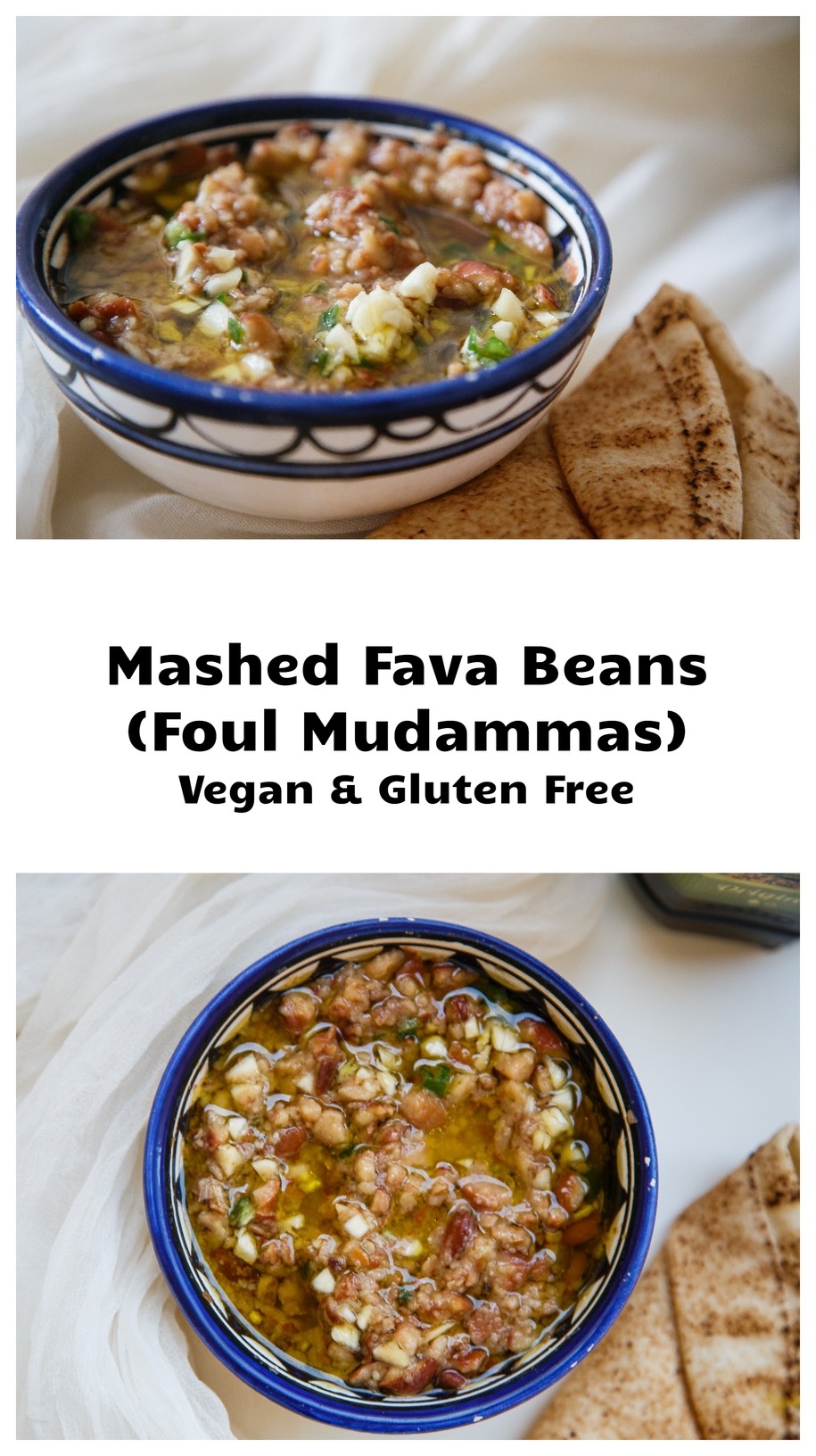


What do you think of mashed Fava beans? Would you try them?

Easy, healthy and delicious!
Thanks Maggie! happy cooking!